

Dentoalveolar Surgery/Preprosthetic Surgery
Preparing your mouth for a denture or resolving a complex dental issue takes more than routine care. It takes surgeons who specialize in exactly that. Dr. William E. Zwack, DDS, FACS, and Dr. Ayesha Nawab, DMD, MD, FACS, at Mid-Maryland Oral & Maxillofacial Surgery, PA, focus exclusively on oral and maxillofacial surgery, bringing board-certified precision to every dentoalveolar and preprosthetic procedure they perform. Their approach combines advanced surgical technique with honest, straightforward communication so you always understand your options and what to expect. Every patient receives a treatment plan built around their specific anatomy, goals, and overall health.

When Dentoalveolar or Preprosthetic Surgery Becomes Necessary
Dentoalveolar surgery becomes necessary when a dental condition can’t be resolved through routine care alone. This includes severely damaged or impacted teeth that need to be removed, infections or cysts that have developed around the roots, and bone or gum irregularities that affect how your teeth function. These procedures address the structural issues that, left untreated, can worsen over time and limit your options for tooth replacement or restoration.
Preprosthetic surgery specifically comes into the picture when your mouth needs to be surgically prepared before a denture can be placed. Because a denture rests directly on the bone ridge, even small irregularities such as sharp edges, excess bone growth, or overgrown gum tissue can make wearing one painful or cause it to fit poorly. In these cases, surgical correction is what makes a successful prosthetic outcome possible. If a tooth has recently been extracted, the bone underneath may also need reshaping before a denture can be fitted with confidence.
Procedures We Use to Prepare and Restore Your Oral Foundation
Our practice offers a comprehensive range of dentoalveolar and preprosthetic surgical procedures, each tailored to meet your specific clinical needs. Below are the core services we provide to help you achieve a healthier, more functional smile.
Dentoalveolar Surgery
Dentoalveolar surgery covers a broad range of procedures that address the teeth and their surrounding bone and soft tissue. This includes tooth extractions, removal of impacted teeth, treatment of dental infections or cysts, and correction of bone or gum irregularities. These procedures are often a necessary first step before restorative or prosthetic treatment can begin. Your surgeon will identify which specific procedure applies to your case during your consultation.
Preprosthetic Surgery
Preprosthetic surgery prepares your mouth for the placement of a partial or complete denture. Since a denture sits directly on the bone ridge, the underlying bone must be the right shape and size for a proper fit. Procedures may include bone smoothing and reshaping, removal of excess bone, ridge reduction, removal of excess gum tissue, and exposure of impacted teeth. Your surgeon will review exactly which steps are needed based on your individual anatomy and prosthetic plan.
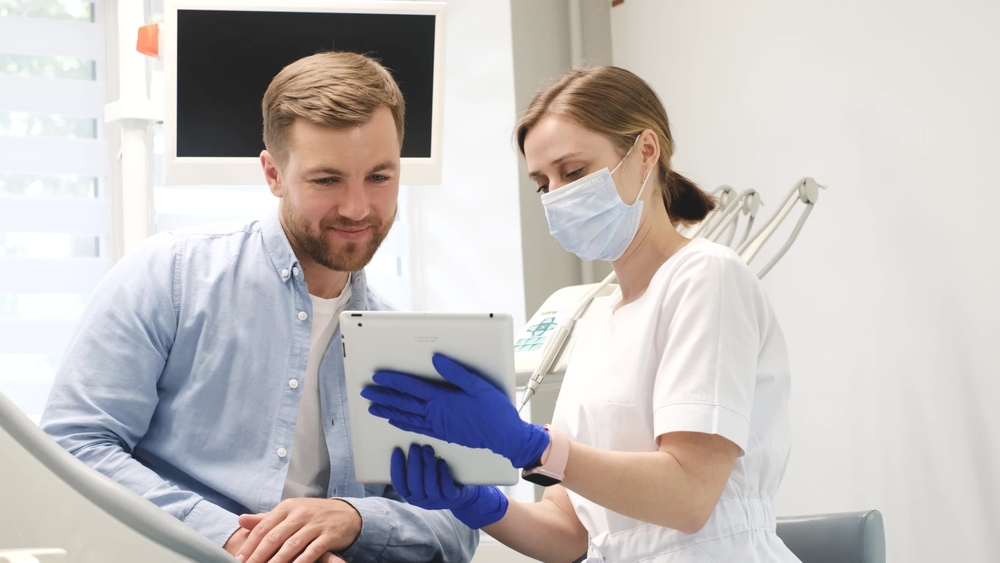
How We Guide You Through Dentoalveolar and Preprosthetic Surgery
Why Choose Our Approach to Dentoalveolar & Preprosthetic Surgery
When your oral health requires surgery, the qualifications and experience of your surgical team matter more than anything else. Dr. Zwack and Dr. Nawab are both board-certified oral and maxillofacial surgeons who hold Fellowship distinction with the American College of Surgeons, a recognition earned by fewer than 20% of surgeons nationwide. This level of credentialing reflects not just technical skill, but a sustained commitment to surgical excellence and patient safety that guides every procedure performed at our practice.
What sets our care apart is the attention we give to each patient as an individual. We do not take a one-size-fits-all approach to surgical planning. Your bone structure, health history, and prosthetic goals all shape the recommendations we make. Patients also benefit from having direct access to their surgical team throughout the recovery process, not just on procedure day. If a question comes up or something feels off during healing, you can reach us directly rather than waiting days for a callback. That level of accountability is something Mid-Maryland Oral & Maxillofacial Surgery, PA, takes seriously, because the care we provide does not end when you leave the operating chair.

Precision Surgery Starts With the Right Specialists in Your Corner
Dentoalveolar and preprosthetic surgery done right creates the foundation for dental solutions that fit well, feel comfortable, and last. Dr. William E. Zwack, DDS, FACS, and Dr. Ayesha Nawab, DMD, MD, FACS, bring board-certified surgical expertise and a patient-first mindset to every procedure performed at Mid-Maryland Oral & Maxillofacial Surgery, PA. Your oral health deserves that level of precision and care, and we are here to deliver it. Book your consultation by punching in 301.694.2300, and check our social media pages for helpful post-surgical tips and a behind-the-scenes look at our practice.
FAQs
What is dentoalveolar surgery?
Dentoalveolar surgery refers to surgical procedures that involve the teeth and their supporting structures, including the surrounding bone and gum tissue. Common examples include tooth extractions, removal of impacted teeth, treatment of infections or cysts, and bone or soft tissue reshaping. These procedures address both urgent dental problems and planned preparatory steps for future restorations. Your oral surgeon will recommend the appropriate procedure based on your clinical evaluation.
What is oral and maxillofacial surgery?
Oral and maxillofacial surgery is a specialized field focused on diagnosing and treating conditions that affect the mouth, jaws, face, and neck. Surgeons in this field complete both medical and dental training, which allows them to manage everything from simple tooth extractions to complex jaw reconstruction and facial trauma. Procedures in this specialty often require anesthesia and may take place in a surgical office or hospital setting. It is one of the most highly trained specialties in dentistry.
How painful is maxillofacial surgery?
Most patients are surprised to find that discomfort after oral and maxillofacial surgery is manageable with the medications provided. Local anesthesia and sedation are used during procedures to ensure you feel nothing while in the chair. After surgery, prescription or over-the-counter pain medications help control any soreness during the first few days of healing. Taking medications with food, following post-operative instructions carefully, and contacting your surgeon if pain is severe all contribute to a more comfortable recovery.
How much is oral and maxillofacial surgery?
The cost of oral and maxillofacial surgery varies depending on the procedure, the complexity of your case, and your insurance coverage. Many preprosthetic and dentoalveolar procedures are covered fully or partially by dental or medical insurance plans, especially when they are considered medically necessary. During your consultation, our team will review your specific treatment plan and help you understand the financial aspects, including insurance coordination and available payment options. We encourage you to speak with our office for a more accurate estimate based on your needs.
How long does maxillofacial surgery take?
Procedure length depends on the type and complexity of the surgery being performed. A single-site bone smoothing or tissue removal procedure may take less than an hour, while more involved cases requiring multiple steps may take longer. Your surgeon will give you a realistic time estimate during your consultation so you can plan accordingly. Most patients are in and out of our office the same day, with a responsible adult present to drive them home after sedation.