
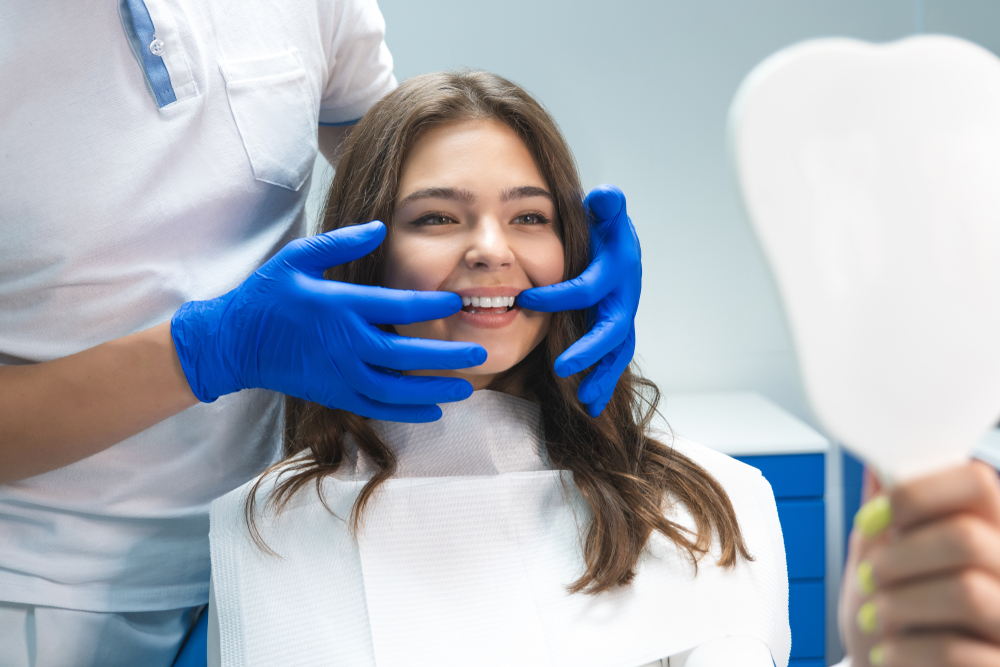
Dental Implants in Monrovia
Tooth loss changes more than your smile, and dental implants in Monrovia are the perfect solution. It affects how you eat, how you speak, and how you feel about yourself every day. At Mid-Maryland Oral & Maxillofacial Surgery, PA, Dr. William E. Zwack, DDS, FACS and Dr. Ayesha Nawab, DMD, MD, FACS bring fellowship-level surgical expertise to every dental implant case, combining precise technique with a genuine focus on each patient’s comfort and long-term dental health. If you are exploring dental implants in Monrovia, you will find a team here that treats every case as its own, from initial imaging through final restoration.

Why Replacing the Root Matters as Much as Replacing the Tooth
Most tooth replacement treatment options focus on what is visible above the gumline, the crown, the prosthetic, the gap that gets filled. But the more consequential loss happens underneath. When a natural tooth is removed, the root goes with it, and so does the mechanical stimulation that signals the jaw bone to maintain its density. Without that signal, bone loss begins almost immediately, with some patients losing up to one-third of jaw width within the first year after extraction. Dental implants address this directly: the titanium screw is placed into the jaw bone to replicate the function of a natural tooth root, not just restore the appearance of a missing tooth.
That distinction matters for long-term dental health in ways that other options simply cannot match. Bridges and removable dentures replace what is visible but do nothing to stop the bone loss continuing silently beneath them. A dental implant, by contrast, integrates with the jaw bone through osseointegration, creating a stable, load-bearing anchor that preserves bone volume, protects adjacent natural teeth from shifting, and supports healthy oral hygiene habits because it functions and is cleaned just like a real tooth. For patients considering dental implants, this is the foundation that makes the difference between a short-term fix and a result built to last.
Implant-Based Solutions for Every Stage of Tooth Loss
Implant Placement
Correct implant placement determines how well your restoration performs for years to come. Our surgeons use advanced technology to guide every decision, depth, angle, and proximity to surrounding structures, so the titanium screw integrates reliably with the jaw bone. Dental anesthesia keeps you comfortable throughout, and when your oral health allows, implants can be placed immediately after extraction, reducing your total number of visits.
Missing Upper and Lower Teeth
Replacing a full arch means choosing from several dental implant treatment options, each suited to different bone conditions and patient preferences. Some patients do well with a removable implant-retained design; others prefer a fixed restoration that stays in permanently. We evaluate jaw bone volume, oral health, and daily functional needs individually so the recommendation fits your specific anatomy, not a default protocol.
Bone Grafting for Implants
When bone loss has reduced jaw bone volume below what implant placement requires, bone grafting restores that foundation first. The extent of grafting needed depends on where the loss occurred and how significant it is, ranging from socket preservation at extraction to ridge augmentation or sinus grafting for more advanced cases. Most procedures are completed in-office, and careful post-operative care during the healing period supports a stable result once implants are placed.
Implant-Supported Overdenture
Unlike conventional dentures that rest on the gums, an implant-supported overdenture anchors directly to dental implants fixed in the jaw bone. This eliminates reliance on adhesives, distributes chewing forces more naturally, and slows the ongoing bone loss that standard dentures accelerate. For patients exploring dental implants with full arch tooth loss, this option often delivers the most meaningful improvement in daily function and oral health.
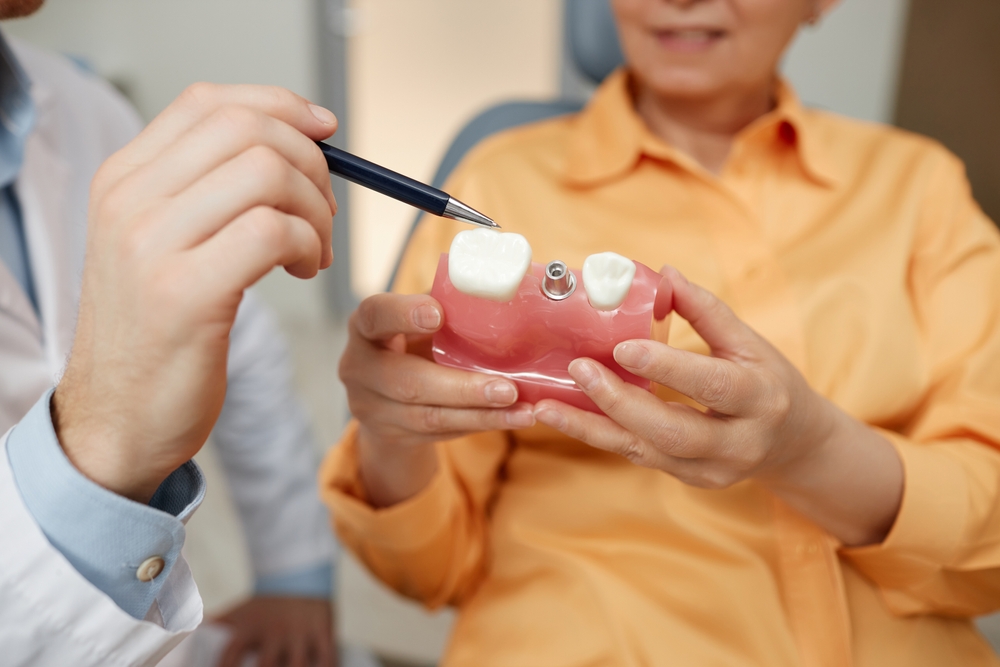
What Each Stage of Your Dental Implant Treatment Involves

Why Choose Us
Implant outcomes are directly tied to the surgical skill of the team placing them. Dr. Zwack and Dr. Nawab are both trained as dentists and as medical doctors, and each holds Fellow status in the American College of Surgeons, a designation that reflects peer recognition for exceptional surgical standards and professional ethics. This level of preparation means they are equipped to handle the full range of dental implant cases in house, including complex bone grafting, sinus augmentation, and full-arch reconstruction, without requiring patients to be referred elsewhere for preparatory procedures.
Beyond credentials, what distinguishes our practice is the way we approach every case. We use advanced technology to plan implant placement before surgery begins, providing patients with a clear picture of the process and a realistic timeline. Oral hygiene guidance and patient education are integrated into every appointment, not limited to a handout at discharge. Our commitment to dental health extends well beyond the surgical visit, through dental checkups, healing period monitoring, and coordination with your restorative dentist, keeping us engaged from the first consultation through your final result.

Stop Living With the Gap and Ask Us About Dental Implants in Monrovia
Dental implants in Monrovia offer a proven path to restored oral health, stable tooth replacement, and lasting confidence, and the right surgical team makes all the difference in achieving a result that holds for years to come. Mid-Maryland Oral & Maxillofacial Surgery, PA provides the specialist-level expertise, precise implant techniques, and patient-first care that the implant process demands.
Dr. William E. Zwack, DDS, FACS and Dr. Ayesha Nawab, DMD, MD, FACS are ready to evaluate your situation and build a plan matched to your specific needs. Check us out on Facebook for oral health tips, practice updates, and patient resources, then contact us at 301.694.2300 to schedule your consultation and take the first step toward a stronger, healthier smile.
FAQs
How do dental implants protect my jaw bone over time?
When a tooth is lost, the jaw bone beneath it no longer receives the stimulation it needs to maintain its density. Without that signal, bone loss begins almost immediately and continues without intervention. A dental implant replaces the missing tooth root and restores that stimulation every time you bite or chew, halting bone loss and preserving jaw bone structure. This is why dental implants are widely considered the most health-protective tooth replacement option available, and why acting sooner rather than later typically leads to a simpler treatment path.
What factors determine how many dental implants I need?
The number of implants required depends on how many teeth are missing, where they are located, and what type of restoration is planned. A single missing tooth generally calls for one implant and one crown, while a full arch can often be supported by four to six strategically placed implants using an overdenture or fixed bridge design. Replacing every tooth with its own individual implant is possible but requires more implants and a longer overall treatment timeline. Your surgeon will evaluate your bone structure and restoration goals to determine the most appropriate number for your specific case.
What is the healing period like after implant placement?
The healing period following dental implant placement involves osseointegration, the process by which the jaw bone gradually fuses to the surface of the titanium screw. This typically takes several months, though the exact duration varies based on bone quality, the number of implants placed, and whether bone grafting was performed beforehand. Most patients experience manageable discomfort in the days following surgery, well controlled with prescribed or over-the-counter medication. Careful post-operative care during this phase directly supports how reliably the implant integrates.
Can dental implants be placed at the same time as a tooth extraction?
In appropriate cases, yes. Immediate implant placement at the time of extraction is possible and can reduce the total number of appointments in your treatment plan. Whether it is a viable option depends on the condition of the extraction socket, the absence of infection in the surrounding tissue, and how much bone surrounds the site. Your surgeon will assess these factors during your initial consultation and advise whether same-day placement is suitable for your situation.
How do I care for dental implants once they are fully restored?
Caring for a restored dental implant is largely the same as caring for natural teeth. Brushing twice daily, flossing around the implant, and maintaining regular dental checkups are the cornerstones of long-term implant health. While implants themselves cannot develop cavities, the surrounding gum tissue and bone can still be affected by gum disease if oral hygiene lapses. Consistent oral hygiene habits and professional cleanings help protect the tissue and bone around the implant, supporting a result that functions well for decades.