
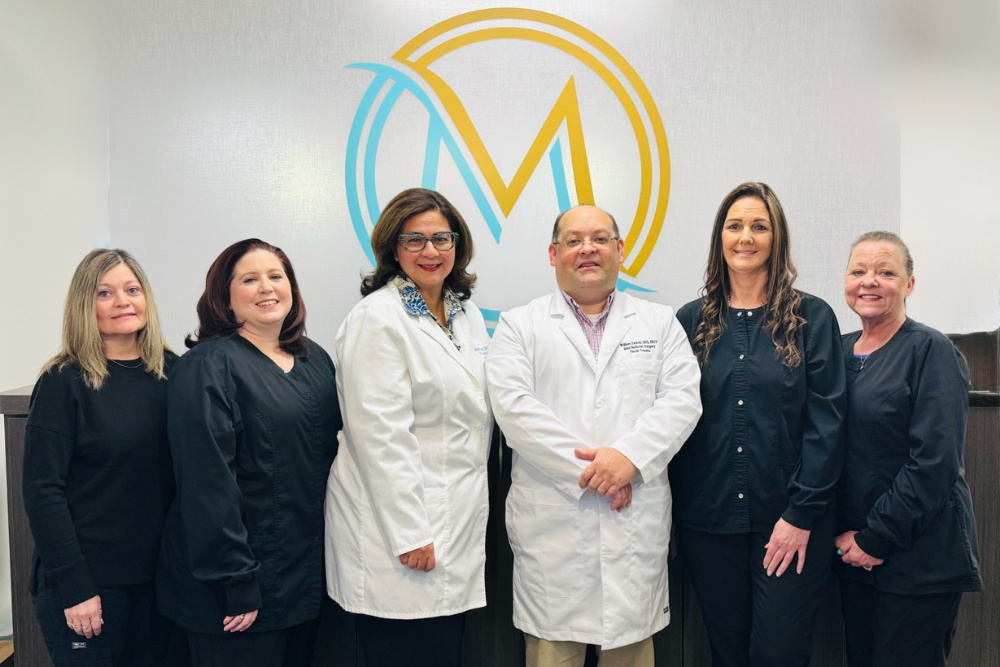
Welcome to Mid-Maryland Oral & Maxillofacial Surgery
Our oral surgeon in Frederick, MD, Dr. William E. Zwack, and Dr. Ayesha Nawab have spent years building a reputation that most surgical practices spend a lifetime chasing, one where complex cases don’t get passed off, anxious patients actually feel at ease, and the standard of care never slips. Mid-Maryland Oral & Maxillofacial Surgery, PA has been a fixture in this community since 1998, delivering the full scope of oral and maxillofacial surgical services to patients across the surrounding counties.
Both surgeons are board certified, fellowship-trained, and credentialed as anesthesia examiners for the State of Maryland Board of Dentistry, a level of qualification that patients trust for their most complex cases. This is a practice that has earned its standing the hard way: by doing the work, taking the hard cases, and treating every patient like their outcome genuinely matters.
Our Mission
Two board-certified oral and maxillofacial surgeons who trained at Harvard, Howard University, and the University of Connecticut didn’t settle in Frederick to do ordinary work. Dr. William E. Zwack and Dr. Ayesha Nawab built this practice around a standard of care that holds firm regardless of how complex the case is, how anxious the patient is, or how much coordination it takes to get someone treated. Honesty, integrity, and patient-centered care aren’t talking points here.
They’re the reason patients drive two hours for an appointment and refer their families back years later. The full range of oral and maxillofacial surgical services is available under one roof: dental implant surgery, wisdom tooth removal, bone grafting, facial trauma care, dentoalveolar surgery, and more, all delivered by surgeons who take personal responsibility for every outcome. At this practice, doing right by the patient is never negotiable.

Our Services
When a Tooth Can’t Be Saved, Extractions Give You a Clear Path Forward
Tooth removal is sometimes the best path forward for your dental health. Whether a tooth is severely decayed, broken beyond repair, or causing crowding that affects your bite, our oral surgeon team walks you through every step. We take time to explain your options so you feel confident in your care plan before anything begins.
At Mid-Maryland Oral & Maxillofacial Surgery, PA, we know that hearing you need an extraction can feel overwhelming. That’s why we focus on clear communication, comfort, and precision. From the moment we numb the area with local anesthetic to the final gauze pad, our goal is a smooth, low-stress experience.
What Happens Step by Step During the Removal Process
Many patients don’t know what to expect once the procedure begins. You’ll feel pressure as we gently rock the tooth to widen the socket, but not pain. Local anesthesia blocks pain signals while still allowing you to feel movement. If you feel discomfort at any point, tell us right away.
Some teeth require sectioning, which means we cut the tooth into smaller pieces before removing each section one at a time. This is common for teeth with curved roots or those firmly anchored in the socket.
- Anesthesia numbs the tooth, jawbone, and surrounding gum tissue
- Rocking motion widens the socket for safe removal
- Sectioning handles complex root shapes without force
- Each section is carefully removed one at a time
- You stay informed and in control throughout
How to Protect the Healing Site After Your Extraction
Recovery starts the moment the tooth is out. Biting on a gauze pad for 30 to 45 minutes helps a blood clot form and that clot is critical. Disturbing it can delay healing or cause a painful dry socket.
For 72 hours after your procedure, avoid rinsing hard, using straws, smoking, or drinking alcohol. Limit hard exercise for the first 24 hours, as raised blood pressure can increase bleeding. Apply an ice pack or a bag of frozen vegetables to the area to reduce swelling, which typically fades within 48 hours.
- Bite gauze pads to stop bleeding and support clot formation
- Avoid straws, smoking, and alcohol for the first 72 hours
- Eat soft, nutritious foods on the day of your extraction
- Take prescribed pain medication or ask about non-opioid alternatives
- Resume brushing and flossing after 24 hours to speed healing
Most patients are back to normal within a few days. The clot, the soft foods, the gentle brushing, those small steps add up to real results. Heavy bleeding, severe pain, or swelling that lingers past two to three days are signs to call us right away. We’d rather hear from you early than have a complication slow your recovery down.
Impacted Wisdom Teeth Removal Is Easier When You Act Early
Most people don’t think about their wisdom teeth until something hurts. But waiting until pain starts often means the roots have fully developed, the teeth are more firmly anchored, and the procedure becomes more involved. An oral surgeon can evaluate the position of your wisdom teeth through an exam and X-rays, often catching problems before they cause real damage. Early removal tends to mean shorter roots, faster healing, and fewer complications down the line.
Impacted wisdom teeth that don’t have enough room to fully erupt can quietly cause serious damage over time. From gum infections to cysts that erode the jawbone, the risks grow with age. Removing them before problems develop is almost always the better path.
The Real Damage Impacted Wisdom Teeth Can Cause Over Time
Leaving impacted wisdom teeth in place isn’t a neutral choice. Without enough space to erupt properly, the gum tissue around the tooth can trap bacteria, leading to pericoronitis, a localized infection that causes recurring pain, swelling, and difficulty chewing or swallowing. Fluid-filled cysts can also form inside the jawbone, slowly expanding and destroying both bone and neighboring teeth. These become much harder to treat the longer they go unaddressed.
Crowding is another concern, particularly for patients who’ve had orthodontic treatment. Impacted wisdom teeth can put pressure on surrounding teeth, and the second molar directly in front is especially vulnerable to bone loss and decay when there isn’t enough room to keep it clean.
- Gum infections around partially erupted teeth are the most common issue
- Cysts can expand silently, destroying jawbone and adjacent teeth
- Crowding of front teeth is more likely after braces
- The second molar is at risk for decay and bone loss
- Problems increase significantly after age 30
What the Procedure and Recovery Actually Look Like
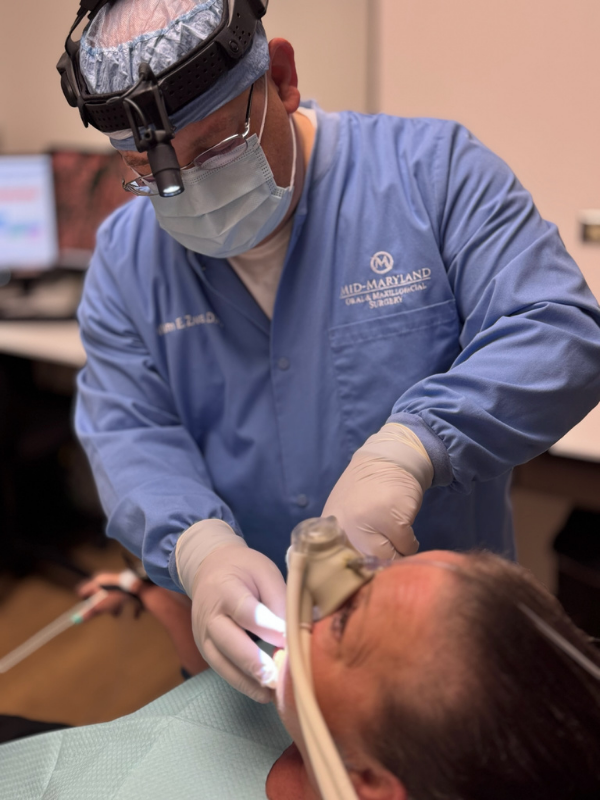
At Mid-Maryland Oral & Maxillofacial Surgery, PA, wisdom teeth removal is performed under local anesthesia, nitrous oxide, or general anesthesia depending on your needs and comfort level. Once the teeth are out, the gum is sutured and you’ll rest in the office until you’re ready to go home. You’ll leave with postoperative instructions, a prescription for pain medication, antibiotics if needed, and a follow-up appointment for suture removal.
The first day usually involves some minor bleeding and discomfort. Swelling typically peaks on day two and starts easing by day three. Ice on the first day makes a real difference in how much you swell. By days three to five, most patients feel like they’ve turned a corner. Your oral surgeon will walk you through what to expect so nothing catches you off guard.
- Swelling peaks at day two and improves significantly by day three
- Use ice consistently on day one to minimize swelling on day two
- Apply moist heat on days two and three to help jaw muscles relax
- Follow postoperative instructions closely for the smoothest recovery
- Most patients resume normal activities within three to five days
Wisdom teeth don’t always give warnings before causing damage. Staying ahead of the problem, with an early evaluation and a clear plan from a skilled oral surgeon, is the most effective way to protect your teeth, gums, and jawbone for the long run. If you have questions heading into your procedure, we want to hear them before you leave the office.
How General Anesthesia and Laughing Gas Make Oral Surgery Less Intimidating
Feeling nervous before a procedure is completely normal. The good news is that modern anesthesia gives us several ways to keep you comfortable, calm, and pain-free, no matter how simple or complex your surgery is. An oral surgeon selects the right approach based on the nature of your procedure and how much anxiety you’re dealing with. Some patients do fine with local anesthesia alone. Others feel much better knowing they’ll be fully sedated and won’t remember a thing.
Every option we offer is backed by formal training, proper licensing, and strict safety standards. Before any procedure, we walk you through exactly what to expect so you can make an informed choice with confidence.
Why the Anesthesia Method You Choose Changes Your Entire Experience
Not all sedation is the same, and understanding the differences helps you feel more prepared. Local anesthesia keeps you fully awake but numb in the treatment area, a solid choice for straightforward extractions. Nitrous oxide layers a calming, pain-reducing effect on top of that without putting you to sleep. You stay conscious and in control, breathe on your own, and leave without a lingering hangover effect.
IV sedation, sometimes called twilight sleep, goes a step further. Medications are delivered directly through an intravenous line, leaving you deeply relaxed, drifting in and out, and with very little memory of the procedure afterward. This is the most popular choice for wisdom tooth removal and implant placement, and it eliminates the added cost of a hospital or surgical facility.
- Local anesthesia works well for minor soft tissue procedures and simple extractions
- Nitrous oxide reaches the brain within 20 seconds and takes effect in two to three minutes
- IV sedation reduces anxiety and minimizes recall of the procedure
- General anesthesia is available for all procedure types, including when local anesthesia fails
- Hospital-based anesthesia is reserved for extensive surgeries or patients with serious medical conditions
How Our Team Is Trained and Licensed to Administer General Anesthesia
Providing general anesthesia in an office setting requires far more than a willingness to offer it. An oral surgeon must complete a minimum of three months of hospital-based anesthesia training before applying for licensure. After that, a state dental board examiner conducts an in-office evaluation, observing a live surgical procedure, inspecting all monitoring and emergency equipment, and testing both the doctor and staff on how to handle anesthesia-related emergencies.
At Mid-Maryland Oral & Maxillofacial Surgery, PA, that license is renewed every two years with continuing education specifically focused on anesthesia. Our monitoring equipment is modern, our staff are experienced in anesthesia techniques, and your safety is the first consideration in every procedure we perform.
- Oral surgeons must complete hospital-based anesthesia training before licensure
- A state-appointed examiner evaluates a live procedure before a license is issued
- Emergency equipment and monitoring devices are inspected as part of the review
- Licensure renews every two years with required continuing education
- Patient vital signs are monitored throughout every anesthesia procedure
Anesthesia conversations happen before surgery for a reason. Your comfort level, health history, and procedure type all shape which option fits best. Come to your consultation ready to be honest about your anxiety level and any health conditions, and your oral surgeon will take it from there. The right choice is the one that gets you through your procedure safely and with as little stress as possible.
Why Dental Implants Remain the Closest Thing to a Natural Tooth
Without a tooth root in place, the jawbone beneath it starts shrinking almost immediately and most patients don’t find out until they’ve already lost enough bone to complicate treatment. Dental implants solve that problem at the source. A titanium post is placed directly into the jawbone, acting as an artificial root that supports a custom crown and keeps the surrounding bone intact.
An oral surgeon brings a level of precision to implant placement that the procedure demands. From the initial incision to seating the implant and monitoring the healing phase, every step is planned around the specific quality and quantity of your bone.
Why Jawbone Loss After Tooth Loss Makes Timing Matter More Than Most Patients Realize
Many patients assume waiting on an implant is a neutral decision. It isn’t. The longer a tooth has been missing, the more the supporting bone thins and pulls back. That bone loss can reach the point where a graft is needed before an implant can even be placed, adding time and complexity to your treatment. In some cases, an implant can be placed immediately after extraction, streamlining the process and avoiding a second appointment. When infection is present, though, immediate placement isn’t the right call, and your oral surgeon will advise accordingly.
Early evaluation gives you the most options. The more bone you have to work with, the more straightforward the placement process tends to be.
- Up to one third of jaw thickness can be lost in the year following extraction
- Immediate implant placement is possible in some cases but not when infection is present
- Bone grafting may be needed if significant loss has already occurred
- Earlier placement generally means more bone available to support the implant
- Adjacent teeth can shift into the gap left by a missing tooth over time
What Actually Happens During Implant Placement and the Healing Phase
The placement procedure itself takes 30 to 60 minutes for a single implant and two to three hours for multiple implants. Before anything begins, you’ll receive local anesthesia to numb the area, and IV sedation or nitrous oxide is available for added comfort. Once you’re ready, your oral surgeon makes a small incision in the gum tissue, creates space in the bone with specialized instruments, and gently positions the titanium implant. Depending on your situation, the implant may remain visible through the gum or be covered during early healing.
After placement, an abutment or healing cap is added during a brief follow-up visit to allow the gum tissue to mature around the implant. Impressions are sometimes taken at placement so the crown is ready as soon as healing is complete. Most patients need one to four follow-up appointments before moving into the restorative phase.
- Local anesthesia is used for all implant placements; sedation options are available
- A small incision exposes the bone so the implant can be precisely positioned
- Healing time varies based on bone quality and quantity
- An abutment is placed after the initial healing phase to prepare for the crown
- One to four follow-up visits confirm healing progress before restoration begins
Dental implants are one of the most involved and most rewarding procedures an oral surgeon performs. The outcome you get five or ten years from now depends heavily on the decisions made at placement: bone quality, timing, tissue health, and healing. Getting that foundation right from the start is what makes the difference between a restoration that holds and one that doesn’t.
Not Enough Jaw Bone for Implants? Bone Grafting Changes That
Bone loss in the jaw happens quietly. After a tooth is removed, the bone that once surrounded its root no longer receives the stimulation it needs to maintain its density, and it begins to shrink. By the time a patient is ready for an implant, there may not be enough bone left to support one. Bone grafting rebuilds that lost structure, giving an oral surgeon a stable, adequate base to work with before implant placement begins.
The upper jaw presents a particular challenge. The maxillary sinuses sit directly above the upper teeth, and when those teeth are lost, the sinus floor can drop, leaving only a thin wall of bone between the sinus cavity and the mouth. A sinus lift addresses this directly by raising the sinus floor and encouraging new bone to form in the space below it.
What a Sinus Lift Actually Involves and When You Need One
A sinus lift, also called sinus augmentation, is one of the most common bone grafting procedures performed by an oral surgeon. It targets the maxillary sinus, the empty air-filled space behind your cheeks and above your upper teeth. When upper teeth are extracted, the roots that once extended into that sinus space are gone, and the bone ridge along the gum line thins over time. Without enough bone height in that area, placing a dental implant simply isn’t possible.
The procedure raises the sinus floor and grafts bone material into the space created below it. Over time, that material integrates with your existing jaw structure, producing new bone growth dense enough to anchor an implant securely.
- The maxillary sinuses sit directly above the roots of the upper back teeth
- Tooth loss in the upper jaw reduces the bone available for implant placement
- A sinus lift raises the sinus floor to create room for new bone to develop
- Grafted bone material gradually fuses with the existing jaw structure
- New bone growth must reach adequate density before implant placement can proceed
Why Bone Quality Matters Just as Much as Bone Quantity for Implant Success
An implant placed into insufficient bone won’t integrate properly, and an oral surgeon evaluates both the volume and density of your bone before recommending any grafting approach. Bone loss from periodontal disease, injury, or prolonged tooth absence each affect the jaw differently, and the grafting strategy is shaped by the specific deficiency present. At Mid-Maryland Oral & Maxillofacial Surgery, PA, that evaluation happens before any treatment plan is finalized, so the grafting procedure directly addresses what your jaw actually needs.
The long-term success of a dental implant depends on how well the bone heals around it. A graft that produces dense, well-integrated bone sets the implant up to function and last the way it’s supposed to, for years, not just months.
- Bone density and volume are both assessed before grafting is recommended
- Periodontal disease, injury, and prolonged tooth loss each affect the jaw differently
- Grafting strategy is tailored to the specific type and location of bone deficiency
- Dense, well-integrated bone supports better implant stability over time
- Skipping grafting when it’s needed increases the risk of implant failure
Bone grafting isn’t a detour in your treatment. It’s the step that makes everything else possible. The jaw needs a reliable foundation before an implant can do its job, and getting that foundation right is what determines how well the final restoration performs over time.
Protecting Your Jaw After Tooth Removal Starts With Socket Preservation
Most patients focus on the extraction itself and don’t think much about what happens to the jaw afterward. Once a tooth is gone, the bone that held it in place loses its purpose and starts to shrink almost right away. The surrounding gum tissue pulls back with it, and over time the jaw develops a sunken defect that complicates every restorative option that follows. Socket preservation stops that process at the source by treating the empty socket before significant loss occurs.
An oral surgeon fills the socket with bone or a bone substitute immediately after extraction, then covers it with gum tissue, an artificial membrane, or a tissue barrier that supports your body’s natural healing response. The result is a socket that heals with its shape and volume intact rather than collapsing inward.
Ignoring the Socket After Extraction Creates Problems That Compound Over Time
Bone shrinkage after tooth removal isn’t just a cosmetic issue. A jaw that has lost significant volume becomes structurally compromised in ways that affect bridges, dentures, and implants alike. Dental implants require a certain depth and width of bone to integrate properly. Bridges depend on the surrounding ridge for support and appearance. Dentures that fit well at first can become loose and uncomfortable as the ridge continues to flatten beneath them.
The collapse of jaw bone also pulls the soft tissue with it, creating visible changes in the face. Cheeks and lips lose the support structure they relied on, and the overall profile shifts in ways that are difficult to reverse without significant intervention later.
- Bone loss after extraction affects implant, bridge, and denture outcomes equally
- Ridge collapse changes the visible contour of the cheeks and lips over time
- Implants require adequate bone depth and width to integrate and hold
- Dentures that fit initially may loosen as the ridge continues to shrink
- Front tooth extractions carry the highest aesthetic risk if the socket isn’t preserved
A Preserved Socket Gives Future Restorations a Stronger Starting Point
Restored bone in a preserved socket doesn’t just look better. It performs better. A well-healed ridge gives an implant more surface area to integrate with, gives a bridge a cleaner emergence profile, and gives a denture a stable platform that holds its fit longer. Skipping socket preservation to save time often adds more time later, through additional grafting, longer healing phases, or restorations that don’t fit or function as well as they should.
Protecting the ridge now is a straightforward investment in the quality of whatever restoration comes next. The new bone that forms in the socket becomes the foundation that makes that restoration possible.
- A preserved ridge provides more surface area for implant integration
- Bridges achieve a cleaner appearance over a properly healed ridge
- Dentures maintain their fit longer on a stable, well-formed ridge
- Skipping preservation often leads to more complex grafting procedures later
- Newly formed bone in the socket serves as the foundation for the final restoration
Socket preservation is a small procedure relative to the problems it prevents. Discussing it with your oral surgeon at the time of extraction is the most straightforward way to protect your jaw, your appearance, and your options for replacing the tooth down the line.
Meet the Doctors
Dr. William E. Zwack and Dr. Ayesha Nawab are the kind of surgeons who are serious about their craft but easy to talk to. Dr. Zwack, focused, skilled, and quietly funny once you get to know him, is the Chief of Oral and Maxillofacial Surgery at Frederick Health Hospital and has been a cornerstone of oral surgical care in Frederick for years.
Dr. Nawab, a Harvard-trained surgeon who previously served as an Associate Professor and Chief of Oral and Maxillofacial Surgery at Ben Taub Hospital in Houston, brings an equally impressive background and a notably warm, patient-centered approach to every consultation. Together, they form a well-matched team that patients describe as thorough, trustworthy, and genuinely caring. Many drive over two hours to see them.

Ayesha Nawab DMD, MD, FACS
Managing Partner
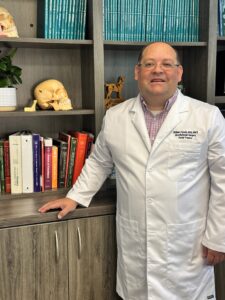
William E Zwack DDS, FACS
Managing Partner
Why Choose Us
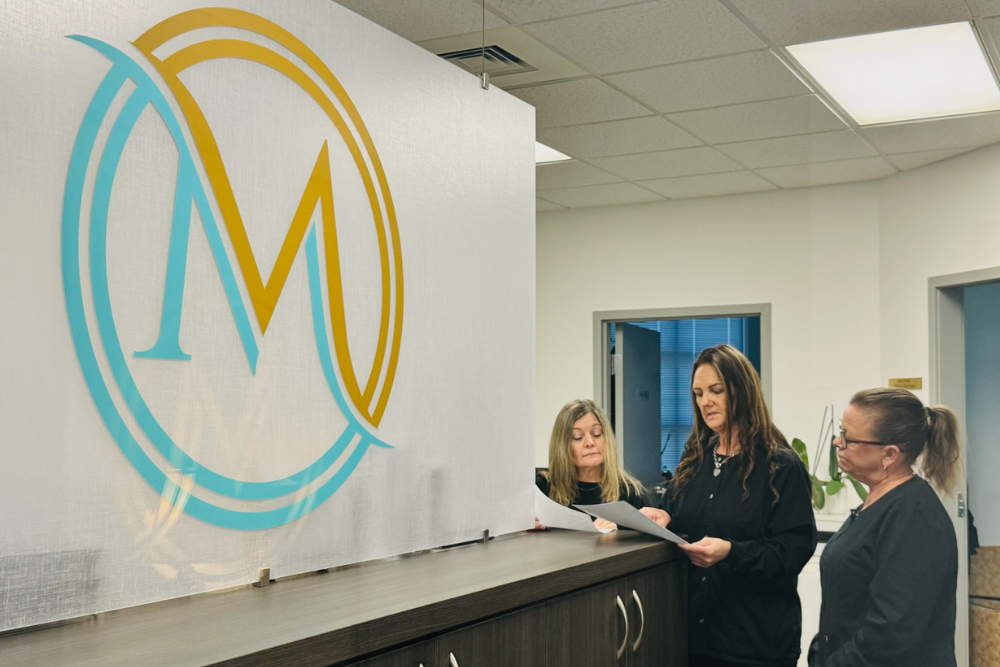
Concerned about opioid use?
Ask our surgeons about alternatives.


Testimonials
Our Oral Surgeon in Frederick, MD Turns First Visits Into Lifelong Patients!
Your oral surgeon in Frederick, MD understands that your oral health is connected to everything, how you eat, how you speak, how you feel about your smile, and how confidently you move through the world. Getting expert help sooner rather than later protects both your health and your quality of life, whether you’re facing dental implant care, wisdom teeth removal, jaw pain, or a more complex surgical need.
Dr. William E. Zwack and Dr. Ayesha Nawab at Mid-Maryland Oral & Maxillofacial Surgery, PA are ready to see you, often the same day you call. Reach out at 301.694.2300 or visit the practice at 68 Thomas Johnson Drive, Suite A, Frederick, MD 21702 to schedule your consultation. Follow the practice on Facebook to stay connected and learn more about the team.
FAQs
Do I need a referral to schedule an appointment?
You do not always need a formal referral to schedule a consultation. Many patients come in based on their own research or at the recommendation of a family member or friend. That said, if your general dentist or another provider has referred you, the front desk team will work directly with that office to gather your records and x-rays ahead of your visit, so you don’t have to manage that coordination yourself.
What forms of payment do you accept?
We accept checks, cash, credit cards, and most insurance plans. Contact our office so a member of our team can verify your insurance or visit our Payment Options page for more information!
Do you offer same-day appointments?
Yes, we offer same-day appointments whenever possible, especially for patients dealing with pain, infection, or urgent surgical needs.
What is oral and maxillofacial surgery, and when do I need a specialist?
Oral and maxillofacial surgery is a surgical specialty focused on the mouth, jaw, face, and surrounding structures. You may need a specialist when your regular dentist refers you for a procedure requiring advanced training, such as wisdom tooth removal, dental implant surgery, bone grafting, jaw surgery, or treatment for facial trauma. Oral surgeons complete additional years of hospital-based surgical and anesthesia training beyond dental school, making them uniquely qualified for these procedures.
Will my procedure be painful?
Our goal is to make your experience as comfortable as possible using advanced techniques and sedation options, and many patients are surprised by how little discomfort they feel during and after treatment.
What sedation options do you provide?
We offer multiple anesthesia options, including IV sedation, to help you feel relaxed and at ease throughout your procedure.
What anesthesia options are available for oral surgery?
The practice offers a full range of anesthesia options, from local anesthesia and nitrous oxide to oral sedation, IV sedation and general anesthesia. Both Dr. Zwack and Dr. Nawab are board certified in anesthesia and serve as anesthesia examiners for the State of Maryland Board of Dentistry. For patients with significant medical concerns who require a hospital setting, surgical procedures can also be performed at Frederick Health Hospital.
How do I know if my case is too complex for a private oral surgery office?
In most cases, it isn’t. This practice was built specifically to handle complex cases, the kind that some offices in the area prefer to send to university hospitals. From all-on-4 treatment and implant-supported dentures to corrective jaw surgery and oral pathology, Dr. Zwack and Dr. Nawab take on the full scope of oral and maxillofacial surgical care. If your case ever requires a hospital operating room, they have privileges at Frederick Health Hospital and can continue your care there.
What should I expect during my first visit?
Your first visit is a comprehensive consultation, not just a quick look and a pamphlet. The doctors take time to review your imaging, explain your diagnosis clearly, and walk you through all available treatment options so you can make an informed decision without feeling rushed. The front desk prepares patients thoroughly before they arrive, so you’ll know what to expect ahead of time. Most patients leave their first appointment feeling significantly less anxious than when they walked in.